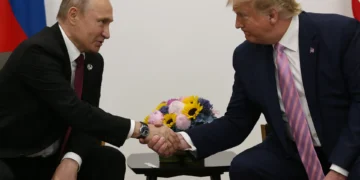








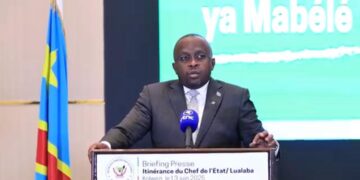

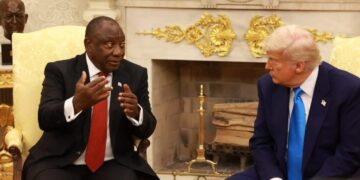


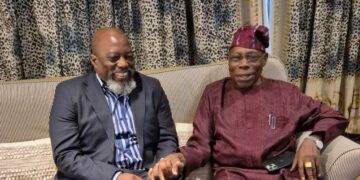
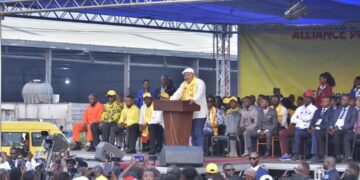




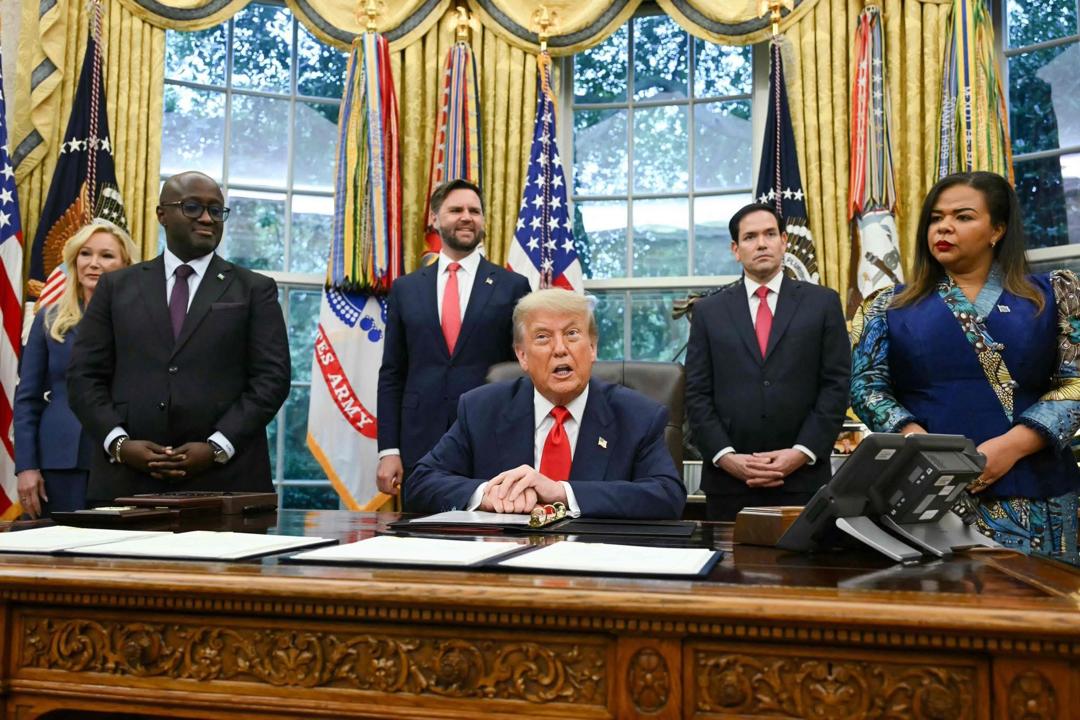
“We negotiated smart. It’s a great deal for peace, but more importantly, for America,” said Trump, who—despite no longer holding office—has remained influential in U.S. diplomatic circles through business networks and his role within the Republican Party. “Congo has the most valuable minerals in the world, and now a big portion of those resources are in good hands: ours.”
A Hidden Tripartite Deal?
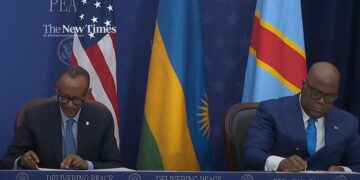
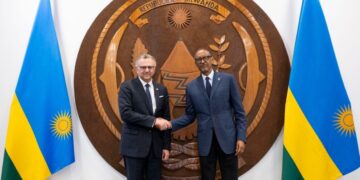
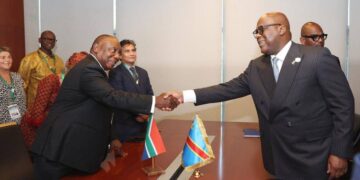
What was officially billed as a bilateral peace agreement between the DRC and Rwanda is now being revealed as a de facto tripartite deal involving major U.S. economic interests. Behind the scenes, several large American mining companies are reported to have secured direct access to concessions in cobalt-, coltan-, gold-, and lithium-rich provinces such as Lualaba, Haut-Katanga, and parts of North Kivu—some of which are still under rebel control.
A “Mining Deal” Disguised as a Peace Accord
While the official agreement has not yet been made fully public, Trump’s statements confirm long-standing rumors that economic clauses are at the heart of the deal, with military and security provisions taking a back seat.
Sources indicate that companies like Freeport-McMoRan, the Tesla Mining Consortium, and General Electric Minerals may be granted privileged access to mining zones under new public-private partnerships negotiated during the peace talks.
“This isn’t a peace deal—it’s a resource contract disguised under diplomatic signatures,” says a Congolese parliamentarian who requested anonymity. “The Congolese people were never consulted about this silent sell-off of their future.”
A Reward for Rwanda?
Another controversial point: despite being widely accused of exploiting Congolese resources through proxy armed groups like the M23, Rwanda is not required to immediately withdraw its troops from Congolese territory under the agreement’s leaked clauses. Furthermore, Kigali reportedly gained economic guarantees, including roles in mineral transport logistics through the Gisenyi Special Economic Zone and the Rubavu border corridor.
For many analysts, this deal internationally legitimizes Rwanda’s role as a regional powerbroker, or even as a subcontractor for Western interests.
Reactions in Kinshasa: Outrage and Official Silence
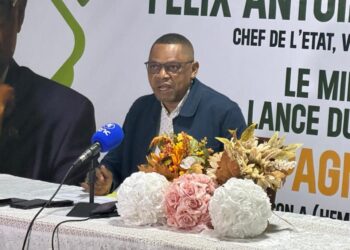
In Kinshasa, backlash is growing. Opposition figures and civil society leaders have accused President Félix Tshisekedi of “high economic treason” and claim he has sold off national resources under foreign pressure.
“This is 21st-century mineral recolonization,” said opposition leader Martin Fayulu. “A deal signed behind closed doors, thousands of miles away from the country, without parliamentary debate or public consultation.”
So far, the Congolese government has remained silent. However, sources close to the presidency suggest Kinshasa may have given in to strong diplomatic and economic pressure from the U.S., in exchange for political support ahead of the 2026 general elections.
Mukwege Sounds the Alarm
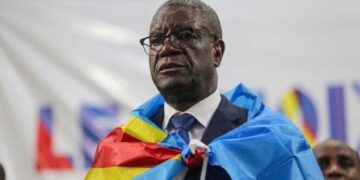
Nobel Peace Prize winner Dr. Denis Mukwege has strongly denounced what he calls a “diplomatic rape of Congolese sovereignty.”
“What we’re seeing is not fair peace, but a new form of occupation disguised under official signatures,” he said at a press conference in Bukavu. “You can’t negotiate peace while handing over the keys to the national subsoil.”
Regional and Global Consequences
The deal could have serious repercussions across the Great Lakes region. Some member states of the African Union—including Angola and Tanzania—are reportedly calling for an emergency summit to review the geopolitical implications of the deal and assess its compatibility with pan-African treaties on economic sovereignty.
Internationally, China—which has major mining stakes in Congo—has reportedly expressed private concerns, while the European Union is calling for “transparency” and “clarification on the economic clauses” of the agreement.
While Washington hails the agreement as a diplomatic success, many Congolese fear that it doesn’t signal the end of violence, but the beginning of a new era of veiled exploitation. For them, peace cannot be built on the loss of economic sovereignty and national dignity.
The debate is just beginning.