

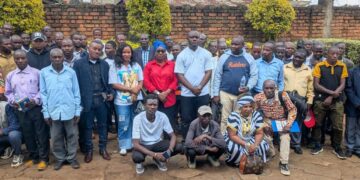











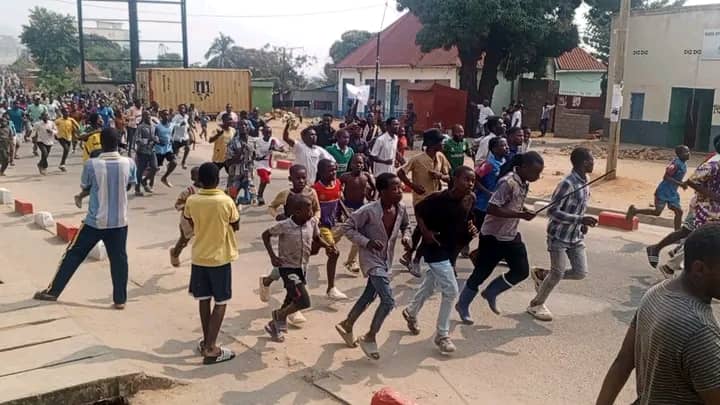
From the early morning, thousands of residents from different neighborhoods gathered at Kavimvira roundabout before marching along Uvira’s main artery. Their main demand: the removal of General Olivier Gasita, Deputy Commander of the 33rd Military Region in charge of operations and intelligence.
Throughout the march, protesters chanted slogans and held banners written in Swahili, one of which read: “Gasita, rudiya kwenu, hatukutaki pa Uvira” (“Gasita, go back home, we don’t want you in Uvira”).
After being temporarily blocked by security forces at Place Monuments, the demonstrators managed to reach City Hall, where they were received by the interim mayor, Kifara Kapenda Kik’y, in the presence of the local security council. On this occasion, they read two memorandums addressed to the President of the Republic, Félix Antoine Tshisekedi Tshilombo, demanding the unconditional departure of General Gasita. They accused him of having facilitated the takeover of some parts of South Kivu by the AFC-M23, including the city of Bukavu.
Protesters fear that the general’s presence in Uvira could pave the way for the occupation of Uvira and Fizi by the rebel movement. They also warned that if the central government fails to act urgently, the population might doubt its good faith and interpret this silence as complicity in the “balkanization” of the DRC. Additional citizen actions, they said, would follow if nothing is done.
The mayor praised the demonstrators for their sense of responsibility, emphasizing that the march had initially been conducted peacefully and without major incidents. He reassured them that their concerns would be forwarded to the relevant authorities while urging the population to remain calm.
However, tension escalated shortly after. A group of protesters headed toward the military headquarters, demanding that General Gasita be handed over to them. Gunfire then erupted, reportedly from FARDC elements. According to preliminary reports, at least four people were killed and several others wounded — a situation still under investigation.
These events are part of a broader wave of protests launched since September 2, marked by repeated “dead city” days that have paralyzed Uvira, underscoring the determination of its inhabitants to obtain the departure of General Olivier Gasita.