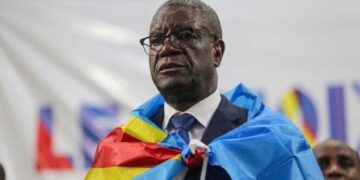





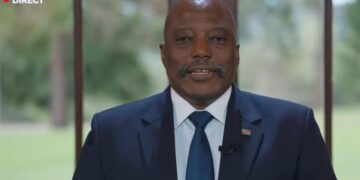








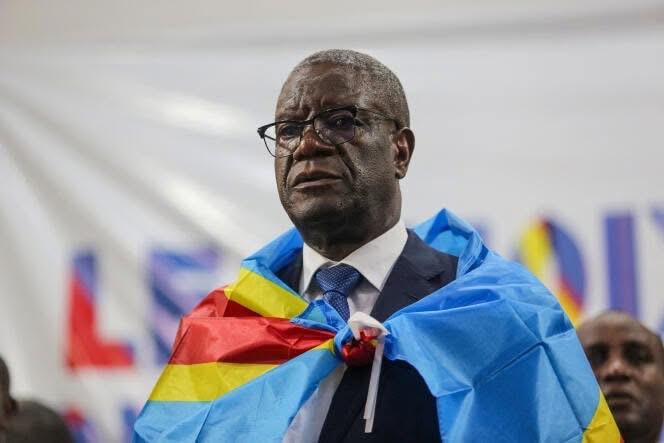
“By signing this agreement, the regime in Kinshasa has handed over our national sovereignty to the very forces of aggression,” Mukwege said. “It legitimizes the occupation and operations of an army responsible for millions of deaths, the rape of hundreds of thousands of women, and the displacement of entire communities in eastern Congo.”
Background: A Controversial Agreement
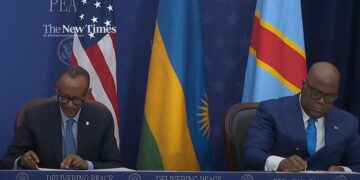
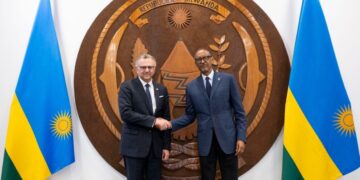
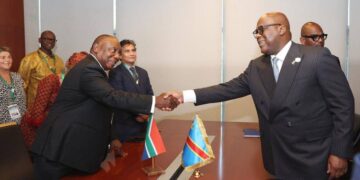
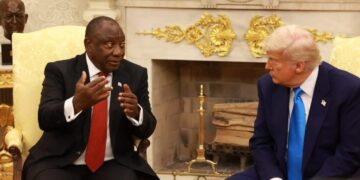
The agreement in question, signed in Washington under the mediation of U.S. and African Union officials, is intended to promote peace and regional stability in the Great Lakes region. It outlines a series of bilateral security arrangements, joint border patrols, and mechanisms for intelligence sharing between Kinshasa and Kigali.
However, the absence of certain key demands—most notably the immediate withdrawal of Rwandan Defense Forces (RDF) from Congolese territory and the disarmament of the M23 rebel group—has sparked outrage across Congolese civil society, opposition parties, and international human rights advocates.
The M23 rebellion, widely believed to be backed by Rwanda according to UN reports, has seized several territories in North Kivu since 2022, contributing to one of the worst humanitarian crises in the world. Rwanda has consistently denied these allegations.
Mukwege’s Concerns: Justice Ignored
For Dr. Mukwege, who has spent decades treating survivors of sexual violence at Panzi Hospital, the deal fails to deliver justice or accountability for the victims of repeated Rwandan interventions in Congo.
“Peace cannot be built on impunity,” he insisted. “This agreement turns a blind eye to the long-standing evidence of Rwandan involvement in crimes against humanity committed on our soil. Our people need justice, not silence and compromise.”
Mukwege also criticized the lack of transparency surrounding the negotiation process, noting that key stakeholders, including representatives of civil society and survivors’ groups, were excluded from discussions.
National Reaction: A Divided Country
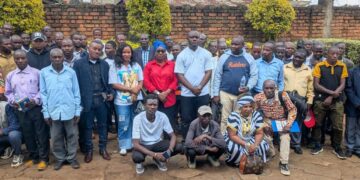
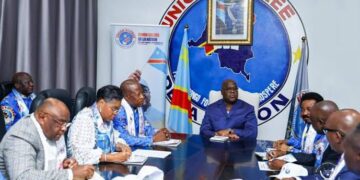
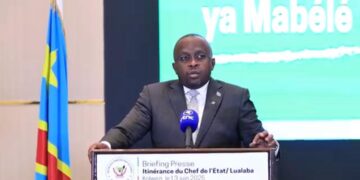
In Kinshasa and eastern DRC, protests have erupted following news of the agreement. Activists accuse President Félix Tshisekedi’s government of capitulation and betrayal. Some members of Parliament have called for an urgent plenary session to question the Minister of Foreign Affairs and the Chief of General Staff about the content and implications of the deal.
“Our Constitution clearly states that no part of the territory of the Republic can be ceded or placed under foreign control,” said opposition MP Adèle Kalume. “What message are we sending to our soldiers and our displaced citizens by making deals with their tormentors?”
International Silence and Diplomatic Pressures
While the United States and several European nations have welcomed the agreement as a step toward de-escalation, none have directly addressed concerns regarding Rwanda’s military role in eastern Congo. Critics argue that Western powers are prioritizing regional stability and counterterrorism cooperation over justice and sovereignty.
Mukwege urged the international community to reconsider its position:
“True peace will come not from rushed signatures abroad, but from an inclusive national dialogue and an end to foreign interference in our internal affairs.”
A Call to the People
Mukwege called on Congolese citizens to remain vigilant and mobilized:
“We must not let our future be negotiated without us. Our dignity, our history, and the blood of our people demand more than diplomatic handshakes.”
The agreement has not yet been made public in full, and several key clauses remain undisclosed. Meanwhile, fighting continues in parts of eastern DRC, raising further doubts about the effectiveness and sincerity of the Washington deal.