
























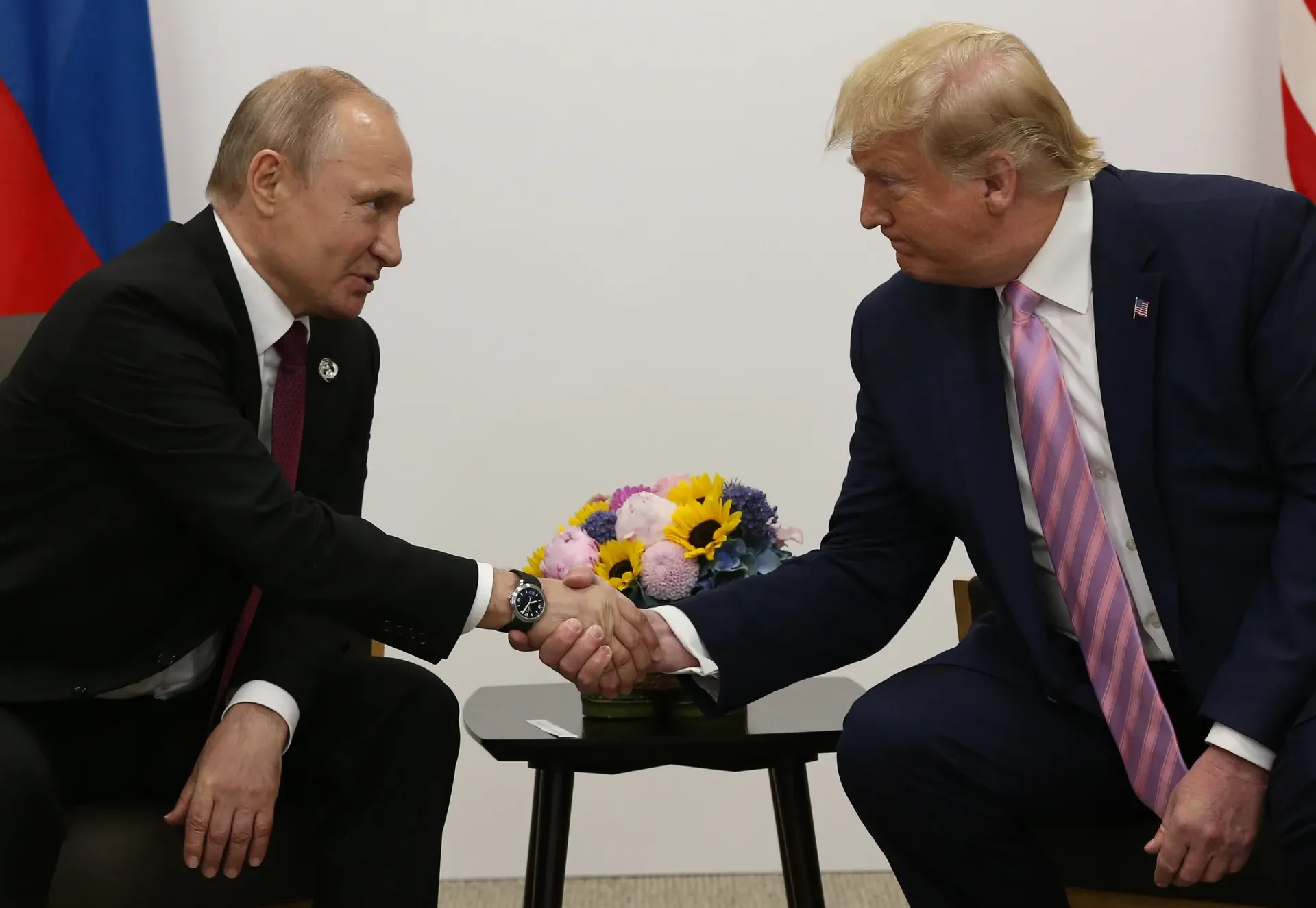
The New START was signed in 2010 by the two elephants, the United States and Russia and entered into force in 2011, at a moment when post–Cold War optimism was already fading, but channels of strategic cooperation still existed. It limited the U.S. and Russian deployed strategic nuclear weapon arsenals. There is no agreed definition of what constitutes a “strategic” or “non-strategic” nuclear weapon, but the treaty defines strategic nuclear weapons systems as those that are “intercontinental in range”, i.e. that can be launched from Europe and detonated in the US and vice versa. The Treaty limited the United States and Russia to 1,550 deployed strategic nuclear warheads on 700 deployed nuclear delivery systems (aeroplanes, intercontinental ballistic missiles and submarine-launched missiles) and to 800 deployed and non-deployed nuclear launchers of those missiles and aeroplanes that can launch nuclear weapons.
The New START limited each side to 1,550 deployed strategic nuclear warheads and placed caps on delivery systems, while reintroducing robust verification and inspection mechanisms.
In practical terms, New START played a critical role in constraining nuclear proliferation risks among the world’s largest nuclear arsenals. By maintaining transparency through data exchanges and on-site inspections, the treaty reduced incentives for worst-case planning and arms racing between the two powerful elephants. This restraint had global ripple effects when the two largest nuclear powers demonstrated limits and accountability:
- They reinforce the credibility of the United Nations Nuclear Non-Proliferation Treaty (NPT) regime.
- Strengthen the norm that nuclear weapons should be reduced, not expanded.
- They reintroduced robust verification and inspection mechanisms.
Conversely, the New START, which was initially agreed in 2010 and extended for five years in 2021, has expired on the 5th of February 2026. New START functioned as a stabilising anchor, preserving predictability and signalling that, despite deep disagreements, nuclear catastrophe prevention remained a shared responsibility. The expiration and non-renewal of New START removes the last remaining bilateral framework governing US–Russia strategic nuclear forces, creating uncertainty that undermines trust not only between the two states but across the entire non-proliferation architecture.
The absence of New START also reshapes the geopolitical aspirations of states such as Iran. When major powers abandon or allow arms control agreements to lapse, it weakens their moral and political authority to pressure non-nuclear states to exercise restraint. Iran is already sceptical of Western commitment to international agreements may interpret the treaty’s expiration as further evidence that rules are selectively applied. More broadly, the collapse of strategic arms control feeds a permissive environment in which threshold states can justify hedging strategies, arguing that nuclear restraint is no longer rewarded or reciprocated. In this sense, the consequences of New START’s expiration extend far beyond Washington – Moscow relations, potentially accelerating erosion of global non-proliferation norms.
Finally, the likelihood that the United States and Russia will procure or modernise more nuclear weapons has increased in the absence of binding limits. Both states already have extensive modernisation programs underway, and without treaty ceilings or verification mechanisms, these efforts may expand in scope and pace. While neither side may immediately pursue large numerical increases, the incentive to diversify, upload warheads, and deploy new systems grows as strategic uncertainty deepens. As the Kikuyu warns, when great powers compete without restraint, it is the broader international community, the “grass”, that bears the risk. The expiration of New START thus marks not merely the end of a treaty, but a troubling step toward a less predictable and more dangerous nuclear order.
Prof. Feruzi Ngwamba
Pietermaritzburg, 10th February 2026.