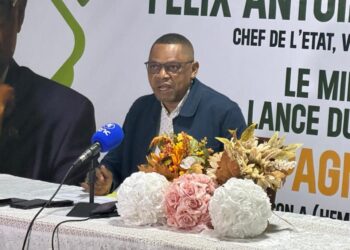





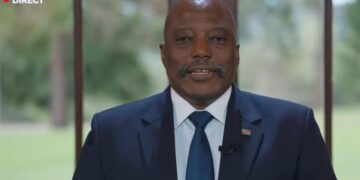

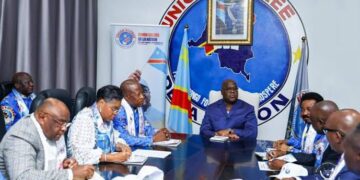

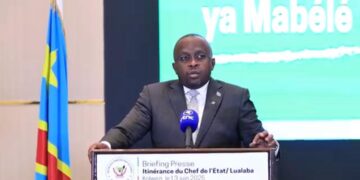






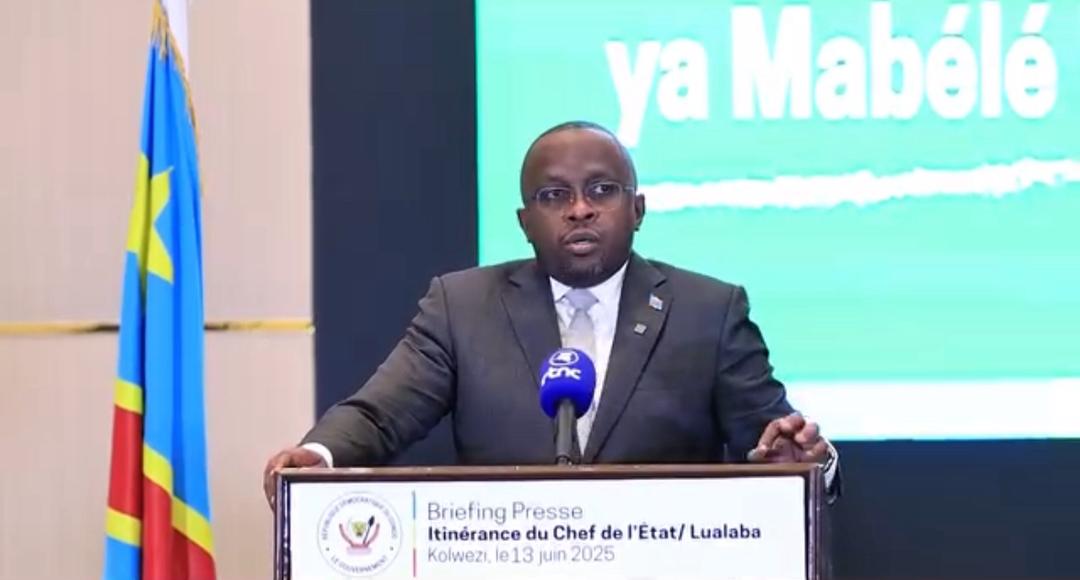
“Restoring state authority means reestablishing the public administration, security apparatus, and social services in all territories currently controlled by the AFC/M23. This is non-negotiable. It’s about reaffirming the sovereignty of the Republic and delivering governance to its citizens,” Lukoo stated during a press briefing in Kinshasa.
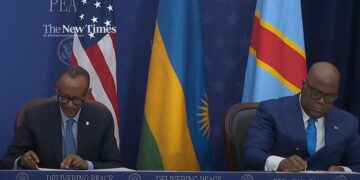
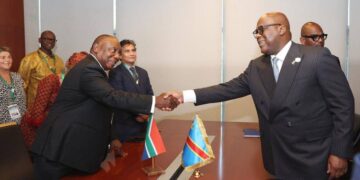
The declaration, facilitated by international mediation notably from Qatar — aims to open a political space for dialogue between the Congolese government and the M23/AFC, a rebel coalition accused of receiving backing from neighboring Rwanda. The group has been occupying key towns and villages in North Kivu since 2022, setting up parallel administrations and displacing hundreds of thousands of civilians.
In this context, the government’s insistence on restoring its administrative presence is both a matter of national pride and a precondition for peace. The stakes are high: without reasserting its presence in these territories, Kinshasa risks leaving power vacuums that could perpetuate cycles of violence and foreign influence.
Lukoo emphasized that true peace cannot be achieved without effective governance structures in place. “You can sign declarations, you can silence guns temporarily, but if the people in Rutshuru, Masisi, and Bunagana don’t see the return of their mayors, police officers, teachers, and nurses, then we haven’t done our job,” he said.
He added that this restoration must go beyond symbolic gestures: it must involve the deployment of state institutions, the rehabilitation of infrastructure, and the provision of basic public services such as health, education, and justice.
Observers note that similar agreements in the past such as the 2013 Nairobi Declaration after the first M23 rebellion — failed to bring lasting peace precisely because they lacked a clear and enforced strategy for reestablishing state control. Many communities felt abandoned, and the power vacuum left by a retreating state was quickly filled by armed groups.
Lukoo insists that this time will be different:
“The DRC has learned from its past mistakes. The current process is anchored in both diplomatic realism and national resolve. We will not repeat the same errors.”
Despite the government’s firm stance, significant obstacles remain. The M23 continues to maintain a military presence in several strategic locations. Deep mistrust persists between the parties, and the humanitarian situation is dire, with over 1.5 million people displaced in North Kivu alone.
Moreover, efforts to restore authority must be coordinated with ongoing military operations, community reconciliation, and international diplomatic pressure especially regarding Rwanda’s alleged involvement.
For many Congolese, the restoration of state authority is more than a political slogan it is a test of national sovereignty. The failure to reclaim control over the east has long been a source of national frustration and humiliation.
“We are not negotiating the sovereignty of the DRC,” Lukoo concluded. “We are working to recover every square kilometer of our territory and to ensure that every citizen, wherever they live, feels the presence of the Congolese state not of rebels or foreign armies.”