










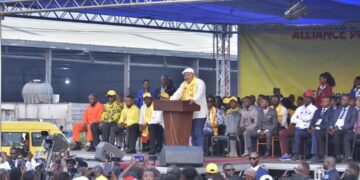
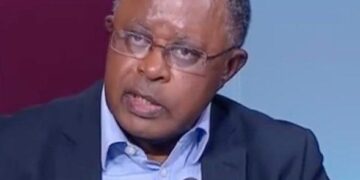





In a pointed declaration that has drawn national attention, Professor Muhindo Mughanda, President of the Conference of Heads of Higher Education Institutions in North Kivu, has lauded former President Joseph Kabila as the Congolese leader with the deepest understanding of the country’s challenges and potential.
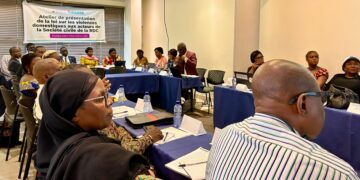
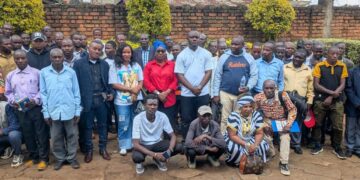
Speaking during a recent conference held in Goma focused on national unity, education, and institutional leadership, Professor Mughanda said:
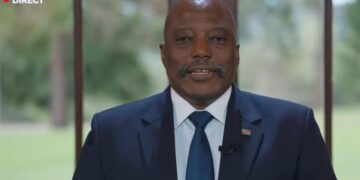
“There is no one who knows the Congo better than the former Head of State Joseph Kabila, for having led it for 18 years. His experience, his silence, and his endurance reflect the soul of this nation.”
This statement, though seemingly a tribute, has opened a broader political debate about the enduring legacy and possible future role of Joseph Kabila in the Democratic Republic of Congo’s political life.
Joseph Kabila ascended to power in January 2001 after the assassination of his father, Laurent-Désiré Kabila, during a time when the DRC was embroiled in one of the deadliest conflicts since World War II. At just 29 years old, he became one of Africa’s youngest heads of state. Despite initial skepticism, Kabila managed to oversee a transition from war to relative stability, culminating in the 2006 elections the first democratic elections in over four decades.
During his 18-year presidency, Kabila implemented a new constitution, maintained territorial integrity amidst secessionist threats, and initiated major infrastructure and mining reforms. However, his rule was also marked by allegations of corruption, suppression of dissent, and controversial electoral delays that led to widespread protests between 2016 and 2018.
In 2019, in a historic moment for the DRC, Joseph Kabila peacefully handed over power to Félix Tshisekedi, marking the country’s first peaceful transfer of power since independence in 1960. This moment alone solidified a sense of political maturity and a departure from the violent transitions that had long plagued the Congolese state.
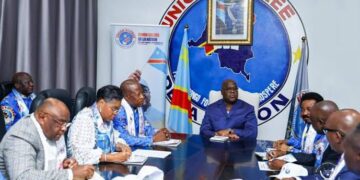
Since leaving office, Kabila has maintained a notably low profile. Nonetheless, he remains the head of the Front Commun pour le Congo (FCC), a powerful political coalition that still commands significant influence within the National Assembly and across many provinces.
Professor Mughanda’s remarks come at a time when the DRC continues to face significant insecurity, especially in the east, where rebel activity, foreign interference, and humanitarian crises persist. Many Congolese, particularly in North Kivu and Ituri, look back to periods of greater relative stability under Kabila with a mixture of nostalgia and criticism.
Mughanda, as an intellectual and leader within the educational sector, emphasized that the country could benefit from Kabila’s insights and institutional memory. “In a nation where leadership is too often improvised, Kabila’s deep institutional knowledge should be preserved and possibly consulted,” he added.
While Professor Mughanda did not directly call for Joseph Kabila’s return to active politics, his statement is being interpreted by some analysts as a subtle endorsement or at least a public reminder of Kabila’s enduring political capital.
The DRC is now less than four years away from the next presidential election, and early positioning is already underway. With President Tshisekedi’s second term underway, opposition leaders and veteran figures may be weighing their strategies. Kabila, despite his silence, remains a name with weight across the country.
Mughanda’s comments have drawn mixed reactions on social media and in political circles. Supporters of Kabila praise the professor for “speaking the truth” and recognizing Kabila’s role in preserving national sovereignty. Critics, however, accuse the professor of political opportunism, arguing that the former president also presided over years of stagnation and democratic regression.
Nonetheless, the timing and venue of the remarks coming from an academic leader in a region still grappling with insecurity underscore the emotional and political resonance Joseph Kabila continues to hold in parts of the country.
Whether Joseph Kabila seeks a more public role in the DRC’s future remains to be seen. But as Professor Muhindo Mughanda’s remarks demonstrate, his legacy and knowledge are still regarded by many as essential to understanding and possibly guiding the future of the Democratic Republic of Congo.


